
By Alesha Washington and Phyllis Campbell
The following opinion editorial originally appeared in The Seattle Times
Over breakfast recently, we realized that 18 years separate the moment when the two of us each took the helm of Seattle Foundation as CEOs — first in 2004 (Phyllis) and then in 2022 (Alesha). As we marked the foundation’s 80th year, we reflected on how the city has changed, what has stayed the same and what lies ahead for an institution intentionally created to serve this place.
Eighty years ago, in the wake of World War II, Seattle faced a turning point. Families were still reeling from The Great Depression; returning veterans confronted a severe housing shortage; and massive layoffs at Boeing weakened the region’s industrial backbone. At the height of the crisis, roughly 8,000 men and women filed weekly for unemployment benefits. And yet, amid that uncertainty, people chose solidarity over retreat: they pooled resources, supported neighbors and built an institution designed to endure.
Seattle Foundation was born from those conditions in 1946, as a vehicle to improve the quality of life in Seattle. Created as an intermediary, part bank and part advocate, it combined financial expertise with a commitment to ensure resources reached the people and communities that needed them most. That ethos has never left us.
Like Seattle in 1946, our region is again navigating economic uncertainty, rising inequality, political polarization and cuts to federal funding. Today’s nonprofit leaders, including those in Seattle, face unprecedented burnout while serving communities with growing needs amid an unpredictable funding landscape.
The scope of this crisis is stark. According to the Center for Effective Philanthropy’s State of Nonprofits 2026 report, which surveyed nearly 400 nonprofit leaders, almost three-quarters of these leaders say their organizations have experienced increased demand for services, while funding from foundations has decreased. The study also notes that many nonprofits are making strategic adaptations to their work in order to survive. In this climate, nonprofits must move with agility. Trust-based philanthropy addresses this need, allowing foundations to move discretionary funding to nonprofits who are on the front line of addressing community needs.
Seattle Foundation has been keeping pace with these challenges. From an initial $8,000 in grants in 1946, Seattle Foundation has mobilized more than $5 billion in public investments over the past decade in Seattle and across Washington. That growth reflects this community’s generosity and its enduring commitment to a resilient, vibrant region. But resources alone are not enough. Lasting change comes from taking action during times of uncertainty and standing firm on the ideals that unify us.
We must see ourselves as one community: one that gives generously and one that commits itself to activating that generosity through grassroots efforts. This is how we ensure our collective resiliency in times of shock. This fuels our approach as a community foundation to lead bold, responsive grantmaking, including rapid-response funding, support for nonprofit leaders’ care and restoration, and work across sectors to meet community needs in crisis.
This was evident in 2008, when Seattle Foundation launched the Building Resilience Fund to help King County families weather the economic crisis. In 2021, we partnered with the public and private sector to establish the Evergreen Impact Housing Fund to advance affordable housing development in the region. EIFH has already invested in five projects that will provide more than 1,100 units of affordable housing for working families in our region. And just this year, we joined the city of Seattle to launch the First People’s Climate Fund, to invest in Indigenous-led climate solutions.
Our approach to grantmaking and public partnership is a part of our legacy and serves as our compass. Now is not the time to step back from supporting work happening on the ground. It’s time to step up.
We call on the philanthropic community,which has become a bold force of generosity, to lean in, and we call on our community of grassroots nonprofit partners to courageously hold the line as we all work together to move resources quickly during this time of social crisis.
The data is clear: Demand for services is increasing. Funding is diminishing. We must unite, align and fuel the entire ecosystem of leaders driving real change where communities need it most.
Just as we shared our hopes over breakfast that morning, we pass this commitment forward to the next generation: The work of building community continues, and Seattle’s best days are still ahead of us.
Alesha Washington: is the president and CEO of Seattle Foundation. She leads efforts to inspire transformative philanthropy to foster shared prosperity, belonging and justice.
Phyllis Campbell: is the former president and CEO of Seattle Foundation. She is an independent adviser with a focus on family/private company governance and CEO/ board effectiveness.
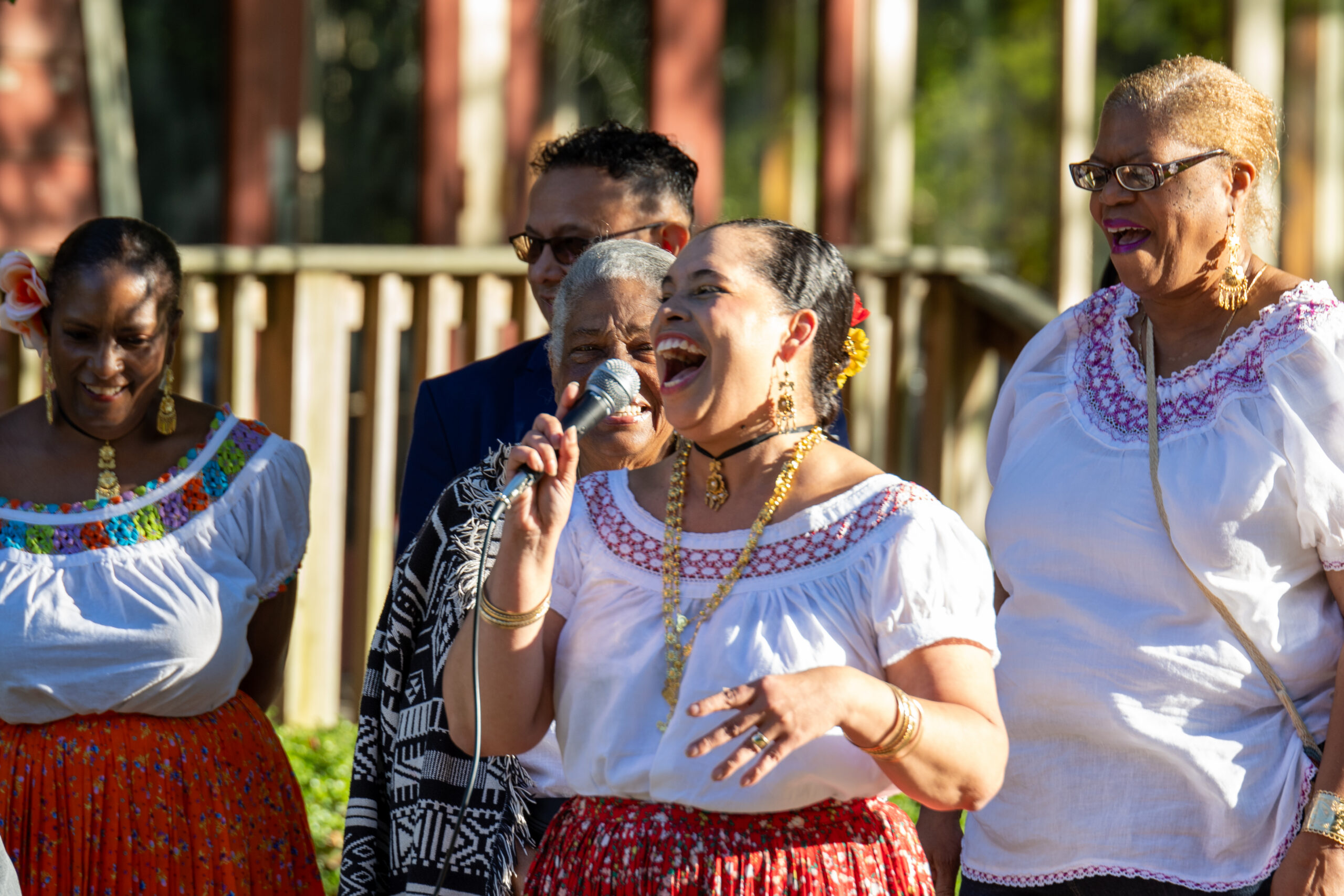
Photo: Seattle Foundation’s Neighbor to Neighbor (N2N) grantees Amigos de Seattle & Panama Folklore perform last year at a gathering celebrating grant recipients. Taken by Melissa Ponder